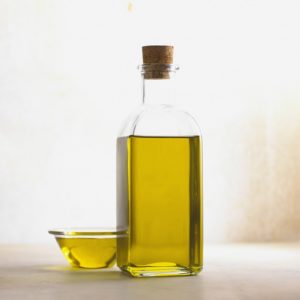
 Lata was excited about a new product she had purchased. It was a oil targeted at diabetics. She wanted to know if it was as good as it claimed. The market is filled with large amount of oil brands in different blends and sources. People are thoroughly confused to make a choice. Advertisers make tall claims about their products. As a consumer, making an informed choice is of paramount importance.
Background:
Traditionally oil was made using a long cylindrical contraption called a “ghani” was used. The oilseeds were placed inside and ground with a pestle until the oil came out. This is the simplest method for “cold-pressing” the oil out of a seed because it doesn’t involve the generation or addition of heat. The residue or the oil cake was used as fodder for cattle.
Post industrialisation, modern machine and methods have produced Refined Oils. Lets take a look at the refining process.
Step 1: Obtain the seeds, nuts or beans.
Step 2: Extract oil (either by mechanical pressing or chemical extraction). Chemical solvents like hexane or heptane may be used to extract the oil and the oil is distilled at 150 degrees Celsius. During this step, the oil loses protein, fibre, vitamins and minerals.
Step 3: Degumming. In this step, oil producers remove the phospholipids – fats that line our cell membranes – as well as calcium, magnesium and iron. One specific fat extracted during this process is called lecithin, a crucial lipid for brain health and memory.
Step 4: Refining. The oil is mixed with a corrosive called sodium hydroxide to further remove phospholipids and free fatty acids.
Step 5: Bleaching. During bleaching, filters remove pigments like chlorophyll and beta carotene. Cholophyll is the plant pigment responsible for photosynthesis, and it has anti-inflammatory and immune-boosting properties. Beta carotene is the pre-cursor to Vitamin A, which is important for our vision, skin and immunity.
Step 6: Deodorizing. By this point, all of the oil processing has impacted its smell and taste. If you were given a teaspoon of oil after Step 5, you definitely wouldn’t want to consume it. That’s why oil producers need to deodorize the product by heating it high temperatures (240-270 degrees Celsius) and filtering out the strong odours and flavours. During this process we lose Vitamin E, an antioxidant that protects our cells from damage.
Before the oils are ready to be sold, preservatives are added to boost shelf life.
* Reference: Erasmus, Udo. Fats That Heal Fats That Kill: The Complete Guide to Fats, Oils, Cholesterol and Human Health.
PHEW that is a lot of chemicals. Further a lot of cheap quality seeds and cheap oils are blended into various oils.
Oils that have been refined through this process stay longer on the shelves and are more stable. This, however, is at the cost of its nutritional value.
What oil should we be using then?
Cold Pressed oils are our best bet. They retain the flavour and antioxidants of the seed. They are healthy for this reason.
Focus should be on traditional oil seeds which have been in India from times immemorial. Mustard, Coconut, Sesame, Groundnut are the most suitable for Indian cooking. Sunflower is the latest addition.
But we have soyabean,ricebran and other blends on the shelves now. Have you ever tried to crush soyabeans and rice bran? We do not get a drop of oil. Then how is oil retrived from it? Using solvents(meaning chemicals). So it is better to stay away from them.
Care when using cold pressed olive oil:
Source from a local,reliable manufacturer
Buy only the quantity used in a month, as these oils can go bad after long time.
Store in glass bottles away from heat.
What about Olive oil?
No discussion about oils is complete without answering this question. Olive oil is touted as the elixir of life by many (pun intended). No doubt Olive and Olive oil is nutritionally very good. But it is a very volatile oil. The good fats in Extra virgin variety is easily lost if not stored and transported in specific temperatures. Since the smoking point of this oil is low it cannot be heated to high temperatures.
So until we can source the extra virgin olive oil from Sicily in brown bottles and controlled temperatures(which can be done only by a select few), we are better off eating local stuff.
Bottomline:
Going back to the roots and using cold pressed oils of local oil seeds like Sesame, Mustard, Coconut, Groundnut is the best foot forward.
Shifted to til oil thanks to your suggestion.
Excellent article, Anupama.
You have brought out the the processes whih kill all natural nutrients of the oil.
Thank you
food for thought… already using mustard oil in my kitchen