 Micronutrients consisting of Vitamins and Minerals are the back bone of all metabolic processes of the body. The body cannot produce these micronutrients and food is the main source of them. A balanced diet should provide all the micronutrients, but the present population lacks a significant amount of these micronutrients due to excessive use of processed food and lack of vegetables and fruits in the diet.
Zinc is one of the most common elements in the earth’s crust and is found in the air, soil, and water and is present in all foods. Used since ancient Egyptian times to enhance wound healing, zinc is a mineral that is necessary for the survival of many species. Zinc is one of the most important essential trace mineral human body needs. The content of Zinc is second only to Iron in human body. The amount of Zinc in the body is approximately 2 to 3 g. Zinc is largely found in intracellular compartment of tissues such as the liver, pancreas, kidney, bone and muscles, with smaller concentrations in the eye, prostate, fingernails, hair and skin.
Functions:
Zinc is necessary for the growth and development of all living organisms as it is a cofactor for more than 300 enzymes. Zinc plays a very important role in numerous catalytic and regulatory enzymes and in protein folding and receptor binding. Zinc is an essential component of a large number of enzymes including polymerases and proteases involved in many cellular functions and plays an important role in cellular growth, differentiation in tissues including immune system and gastrointestinal tract. It is the cofactor of thymulin, a thymic hormone, essential for T cell maturation responsible for immune function.
Benefits:
Immunity:
Zinc is very important in maintaining the immune system of the body. Ionic zinc, based on its electrical charge, has the ability to exert an antiviral effect by attaching to receptors in nasal epithelial cells and blocking their effects.
Potent Antioxidant:
Zinc is a very strong antioxidant and it helps protect cells in the body from damage caused by free radicals. Zinc can neutralize free radicals and may reduce or even help prevent some of the damage they cause. Free radicals are known to induce aging process, heart disease and cancer.
Hormonal Balance:
Zinc is needed for the production of Testosterone, Estrogen and Progesterone. So any deficiency of Zinc has a direct impact on the fertility of people.
Muscle Growth and Repair:
A key structural role of zinc in protein formation and plays important roles in the functions of DNA. RNA, and transcription of receptor factors. Zinc plays a crucial role in cell division and cell growth, so zinc benefits muscle repairment and growth by making it possible for the body to heal itself and maintain strength in the muscular and skeletal systems. Zinc increases the production of Testosterone, hence it is a key mineral in building muscle mass.
Vision Protector:
Zinc is also a component of key enzymes that help preserve vision and protect against age-related vision loss, including macular degeneration.
Deficiency Symptoms:
Rashes, Anorexia, Lethargy, Growth retardation, Impaired lmmunity, Slow wound healing, Altered taste, Night blindness, Eye and skin lesion, Poor carbohydrate metabolism, Altered cognition, bacterial and yeast infections are some of the symptoms of Zinc deficiency.
The extent of zinc deficiency worldwide is not well documented. Brown and Wuehler in 2000 reported that Prevalence of zinc deficiency in developing countries is very common, and 61% of the population is at an increased risk of low dietary zinc intake.
Food Sources:
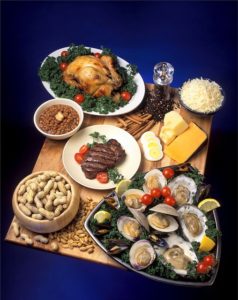
Animal foods such as Red meat, Eggs, Oysters (cooked), Fish, Cheeses (Ricota,Gouda) are rich sources of zinc. The best plant sources are legumes (Chick peas, black-eyed peas, lentils,peas, and whole soy products), pumpkin seeds, whole grains and nuts.
The bioavailability of Zinc from animal foods is better than plant sources. Phytate (phytic acid) is common in plant foods and
can reduce zinc absorption by attaching to zinc in the
digestive system and preventing absorption. This could be
a problem for vegetarians who get their zinc from highphytate
sources such as whole grains, legumes, nuts and
seeds. People with high-phytate diets might have zinc
requirements up to 50% higher than the normal population.
Soaking and sprouting beans, grains, and seeds, and
using grain products that rise (for example, bread
instead of crackers) reduces phytate.
Requirement:
According to the National Institutes for Health, infants 7 months – 3 years should get 3 mg daily; children 4 – 8 years, 5 mg; 9 – 13 years, 8 mg; males 14 years and older 11 mg; females 14 -18, 9 mg; pregnant females 14 -18, 13 mg; and pregnant females 19 and older, 11 mg. This can be met with a balanced diet when rich sources are consumed regularly.
Supplementation:
Supplementation becomes important when proprer assimilation does not occur. People in high risk categories like Pregnancy, Alcoholics, Adolescents are more prone to zinc deficiencies. People who suffer from severe stomach-acid issues, chronic digestive problems like leaky gut syndrome are also more likely to have a zinc deficiency.
For general health, the following protocol may be followed. A general reccomendation of 15mg per day will suffice.
Zinc citrate and zinc gluconate are the most
reliable forms of zinc supplements. Avoid taking a
supplement of more than the upper tolerable intake
level (UL) of 40 mg per day as that can prevent
absorption of copper.
Conclusion:
Focussing on a Diet change is the best way to ensure Zinc adequacy. Our regular diet should be full of rich sources of Zinc. Zinc supplements are available but should be used with caution, as they can interfere with certain medications and also lead to Zinc toxicity. Popping a pill is never an answer.
Thanks a lot for the blog post. Really looking forward to read more. Want more. Channa Paco Lauryn