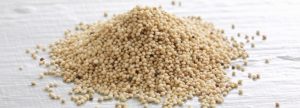
Amaranth belongs to the genera Amaranthus and is derived from the greek term ‘amarantos’ meaning ‘unwithering’. The name matches the conditions in which this plant can thrive. This bountiful seed is grown all throughout India from the high slopes of the Himalayas to the many coastlines of the country. Numerous Amaranth varieties are grown throughout the country, but the Himalaya region is know as the Amaranth ‘centre for diversity’ for the number of varieties that grow in the region. This crop is also a native species to the Andean region of South America, including Argentina, Peru and Bolivia.
The leaves and seeds are consumed in India. It is called by different names Ramdana/Rajgeera/Dantu beeja/Chaulai beej etc.
NUTRITION:
One cup, amaranth contains 251 calories and just 4 g of fat –- none of which is saturated. It offers 29 percent of the recommended dietary allowance for iron, based on a 2,000 calorie diet, and 12 percent for calcium. It is high in magnesium, with 40 percent of the RDA, and 36 percent of the RDA of phosphorus. A cup of amaranth also offers 105 percent of the RDA for manganese which functions as an antioxidant and plays a role in energy metabolism, bone health and wound healing.
Source of Fibre.
Amaranth is a good source of both carbs and fiber. One cup of the cooked grain contains 46 grams of carbs and 5 grams of fiber. The fiber in amaranth may also help with weight control. Fiber in food increases satiety and helps control hunger.
Complete protein.
One cup of cooked amaranth contains 9 grams of protein. Unlike other grains, amaranth is a complete source of protein, which means it contains all of the essential amino acids — just as meats and poultry do. Grains do not contain the amino acid lysine making them incomplete.
Micronutrients.
Amaranth is a good source of a number of essential vitamins and minerals that you need for good health, including B vitamins, calcium, iron and zinc. The B vitamins help our body turn the food you eat into energy, as well as make blood cells. As a good source of calcium, amaranth helps keep our bones and teeth healthy and strong. The iron in the grain assists with the transportation of oxygen throughout our body, and the zinc helps our body heal cuts.
USES:
Amaranth is a versatile Gluten Free psuedo grain. It can be used in multiple ways. Using the whole grain instead of rice in pulaos and daily purposes is the most easiest. Amaranth flour,puffed amaranth can be used to make many dishes. It is a no brainer that we should incorporate this superfood in our diets as much as we can.
WAIT FOR THE RECIPE IN THE NEXT BLOG
wow mam, thank you for highliting so many benefits of Amaranth…it is actually superfood..
thnk you mam for this wonderful information