Know About – Dill

DILL LEAVES

(Also known as Sabsige,Shepu,Soya saag,Soa)

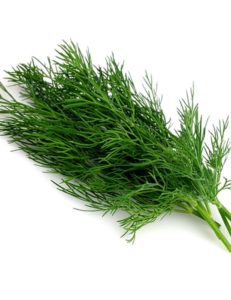
Dill is an aromatic herb, with delicate, feathery green leaves. Sometimes referred to as dill weed, dill is a member of the coriander and fenell family. While it is possible to buy and use dried dill, dill is one of those herbs that loses its flavor rapidly, so fresh is always your best choice.​

The seeds of the dill plant can also be used as a spice. Dill seed is used in a number of Asian, Middle Eastern and European cuisines. Oil extracted from Dill also has medicinal use. Dill is a nutritional power house. It is rich in fiber, Vitamins like Vitamin A,Vitamin C,Folic acid and Minerals like Calcium,Iron, Manganese and Magnesium.

HEALTH BENEFITS:

Dill has been used throughout history to treat a variety of illnesses and ailments. These uses continue to this day. The exact scientific nature of these uses in not known. Some chemicals contained in dill seed might help relax muscles. Other chemicals might be able to fight bacteria and increase urine production like a Diuretic(water-pill)

Dill is used for digestion problems including loss of appetite, intestinal gas (flatulence), liver problems, and gallbladder complaints. It is also used for urinary tract disorders including kidney disease and painful or difficult urination. Other uses for dill include treatment of fever and colds, cough, bronchitis, hemorrhoids, infections, spasms, nerve pain, genital ulcers, menstrual cramps, and sleep disorders. The flavanoids present in Dill act as cancer protectors.

NUTRITIONAL BENEFITS:

100g of fresh Dill leaves consists of 43 kcals, 3.5g of protein,7g of carbohydrates and 1g of fats. Vitamin A-7717 IU(150% ), Vitamin C-80mg,Folic acid-150 microgram.It also has 208mg Calcium,6.6g Iron.

So what are you waiting for? Incorporate this superfood in your eating schedule.

WATCH OUT FOR A DILL RECIPE  IN THE NEXT POST.


Can you gain weight due to lack of SLEEP??

insomnia1_zpse03b6a10During a routine session, my client Vijaya was almost in tears. She had tried to lose weight for sometime now and had applied the latest fad diet in town and insane workout schedule without any lasting results. When I probed further, I came to know that she hardly slept for more than 5 hours a day.

Sleep is restorative in nature. All the repair activities in the body happen when we sleep.Sleep deprivation leads to deficits in cognitive functioning, whether it’s reaction time, decision-making, or memory. According to National Sleep Foundation(NSF), an adult requires 7-9 hours of sleep a day.Lack of sleep can increase the risk of heart disease, stroke, diabetes and other ailments.

Lack of sleep and weight gain are being studied deeply. The two hormones that are key in this process are ghrelin and leptin. Ghrelin is the ‘go’ hormone that tells us when to eat, and when we are sleep-deprived, we have more ghrelin. Leptin is the hormone that tells you to stop eating, and when we are sleep deprived, we have less leptin. More ghrelin plus less leptin equals weight gain.

In a study, it was found that those who only spent four hours in bed for five consecutive nights gained almost two pounds more than those who were in bed for about 10 hours, over the course of a week. In another study,a group led by Drs. Erin Hanlon and Eve Van Cauter at the University of Chicago wanted to better understand how sleep and weight gain interact biologically. They noticed that sleep deprivation has effects in the body similar to activation of the endocannabinoid (eCB) system, a key player in the brain’s regulation of appetite and energy levels. Perhaps most well-known for being activated by chemicals found in marijuana, the eCB system affects the brain’s motivation and reward circuits and can spark a desire for tasty foods.

Steps to regulate sleep cycle:

  1. Switch off all gadgets one hour before sleep.
  2. Everyday sleep at a specific time.
  3. Avoid excessive caffeine.
  4. Exercise regularly
  5. Foods rich in tryptophan like milk,nuts and seeds and fowl help in regulation of sleep. Magnessium rich foods like dark greens, banana also help with sleep.
  6. Avoid high sugary foods and junk foods.

Address your sleep problems, you will see a profound change in your total well- being.

Whole Food Recipe: Pumpkin Soup

Pumpkin SoupIn the spirit of eating whole resolution, I plan to bring in some simple recipes which celebrate wholeness. Today’s recipe is a simple but tasty soup enjoyed by my whole family.

Pumpkin is commonly found in the whole country. It is a powerhouse of vitamins, anti-oxidants and minerals.

Pumpkin has a very high concentration of Beta carotene which gets converted to Vitamin A in the body. Vitamin A is a powerful natural anti-oxidant and is required by the body for maintaining the integrity of skin and mucosa. It is also an essential vitamin for good visual sight. Research studies suggest that natural foods rich in vitamin A may help human body protect against lung and oral cavity cancers.

It is a good source of B-complex group of vitamins like folates, niacin, vitamin B-6 (pyridoxine), thiamin and pantothenic acid.

It is also rich source of minerals like copper, calcium, potassium and phosphorus.

RECIPE:
Ingredients
  • Pumpkin: 250g
  • Butter/Ghee: 1 teaspoon
  • Spring Garlic/Onion: 1 bulb
  • Black Pepper: To taste
  • Salt: To taste
Method

Peel,cube the pumpkin and cook till it is soft. Once it cools down make a puree and keep it aside. Heat butter or ghee in a pan and add finely chopped spring garlic or onion. Sautee for a few minutes and add the pumpkin puree. Dilute with water to the consistency that you prefer. Once the soup starts to boil,add salt and  freshly crushed pepper  to taste. Serve hot.

Serves: 3

The soup contains around 40 cals per serving and 6202 I.U of vitamin A.

Bon Appetit 


Resolve to eat Whole in 2017

2017 is here. Many resolutions like I will lose weight, I will join the gym, I will keep my cool so on and so forth are forming in our brains. Most health resolutions lose their steam before January is over. The main reason for this is, we do not focus on changing or forming new habits. It is very difficult to change habits as they are engrained in our brains. Rewiring the brain into a habit which brings postive change in the body is a difficult task as it needs a lot of Patience, Perseverance and Mentoring.

But all hope is not lost. If you want to make only one change which is instumental in changing the total well being of your persona, is by adopting a Whole food approach.

What are whole foods??

Whole foods are unprocessed foods which do not come out of attractive packings and which are generally not highly advertised. They contain antioxidants,minerals,vitamins and fibre which are of utmost importance for vitality and superior health.

Processed foods are stripped of these nutrients and to increase their shelf life different chemicals are added which create havoc on our bodies. Crores of rupees are further spent to market them. Nobody ties a beautiful bow on a carrot or a mango to sell!! I hope you get the point I am trying to make. Indian food scene is transforming at a tremendous speed. Ready to eat business is a multicrore industry. People or opting for convinient foods over whole foods. The result is evident in the society. Increased rates of obesity,diabetes,heart problems are very common.

Adopt a 80-20 approach

I know many of you are not wanting to forego the processed food completely as they are addictive and comforting in nature.  Adopt a 80-20 approach. 80% of the times eat whole foods and 20% of times give into your cravings. This approach makes the journey more sustainable. It seems simple but needs a lot of conviction to adhere. If you successfully implement it, most of your health woes would be gone.

Wishing Everyone a Happy and Healthy 2017.

Should we be replacing sugar with artificial sweetners?

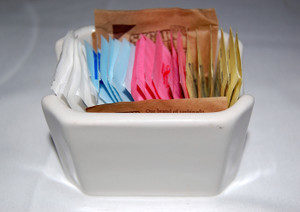
sweetner-pic

In recent times, we have been surrounded with many brands of artificial sweetners. They make tall claims of weight loss and sugar control. My clients always pose questions on, the pros and cons of their usage. I am making an effort to clarify the same.

Artificial sweetners or Non nutritive sweetners are chemicals used in place of a natural sweetner like sugar, honey etc. They cannot be utilised by the body metabolically, hence cannot contribute calories. The common sweetners approved by the FSSAI(regulatory body) are Aspartame, Acesulphame K2, Saccharin and Sucralose.

Aspartame is a sweetner sold under the brand names Sugar Free Gold, Equal, Nutrasweet etc. It can be found in products like sugar-free gums, soft drinks, desserts, some cereals, laxatives etc.

Acesulphame K is generally used in conjunction with either sucralose or aspartame.

Saccharin is sold under the brand name of Sweet’N Low and is used in a variety of foods, bevarages, parmacueticals and cosmetics.

Sucralose is sold under the brand name Splenda, Sugar Free Natura etc and generally used in sugar free baked foods as it can withstand high temperatures.

On the surface, the use of artificial sweetners may seem to help cut the calories and has managed to enter the daily lives of many diabetics and calorie concious people. But several voices of dissent are emerging which show the negative effects of sweetners. Saccharin use, has led to the development of cancers in rats in a study. Aspartame used in Diet sodas, gums and other sugar-free products is claimed to cause cancer, weight gain, dizziness, depression etc. Another multiethnic study found that daily consumption of Diet sodas was associated with a 36% greater risk for metabolic syndrome and a 67% increased risk for type 2 diabetes.

Research published in the journal Nature in September of this year reveals another, previously unknown, mechanism by which artificial sweeteners make us gain weight and disrupt our metabolic function.  In recent years, we’ve learned that gut bacteria play a significant role in human health.  Artificial sweeteners disrupt our intestinal microbes thereby raising our risk of both obesity and diabetes.

Artificial sweetners also have a psychological bearing. One concern is that people who use artificial sweeteners may replace the lost calories through other sources, possibly offsetting weight loss or health benefits, say experts. This can happen because we like to fool ourselves: “I’m drinking diet soda, so it’s okay to have a samosa or a cookie”.

Artificial sweeteners are far more potent than table sugar and high-fructose corn syrup. A miniscule amount produces a sweet taste comparable to that of sugar, without comparable calories. Overstimulation of sugar receptors in the tongue,will lead to increased requirement of sweetness to satisfy the pleasure centres in the brain. That means people who routinely use artificial sweeteners may start to find less intensely sweet foods, such as fruit, less appealing and unsweet foods, such as vegetables, tasteless. Animal studies suggest that artificial sweeteners may be addictive. In studies of rats who were exposed to cocaine, then given a choice between intravenous cocaine or oral saccharin, most chose saccharin.

My View

Are you using artificial sweeteners for weight loss or to curtail calories? While they have little or no calories, they are not helping us to lose weight. Most of these sweet chemicals cause our insulin to rise. When insulin rises, our blood sugar is lowered. Low blood sugar causes us to crave and eat more. Studies have shown that people who consume artificial sweeteners eat more calories than people who don’t for this reason. Additionally, this rise in insulin signals our body to store fat or not use it as fuel.

Considering the above mentioned arguments and not knowing the safety or benefits of these chemicals on the long run, I am cautious about their usage on a daily basis. Check the food labels thoroughly before buying them. Its better to stick to natural sweetners like sugar, honey, stevia in moderation. Its about training the tongue to accept less sweetness.

 Should we be replacing sugar with artificial sweetners?

I don’t think so. I will instead have less or no sugar on a daily basis and an occasional treat with sugar or jaggery.
Watch What You Eat

A new week had started. While going through the appointment list of the day, I came across a name which looked familiar and triggered a memory. She was one of my older clients, who had undergone a fabulous transformation. I was about to talk to her after 5 years. When we started the skype call, I came to know that she wanted to discuss about her 10 year old son. He was recently diagnosed with type 2 diabetes. I was horrified to hear this. When I started my career, I never would have imagined that I would make plans for a young kid to control diabetes. This boy in focus had a round tummy and was completely on all kinds of junk food. The excuse was that he was young and he could afford to eat all the crap. She was under the impression that she could wean him off all the junk when he would grow up. Sadly she forgot one important fact that “Habits don’t change easily”.

This incident made me aware about the enormity of the problem. We live in a world of over information or confusing information. Cashing on this confusion is a multi-crore rupee food industry, which would go to any length to entice all of us. Their main propaganda is profits at the cost of the health of the public. The focus is always on the taste buds. People find it extremely difficult to choose the right food. Packaged food has taken prime place in our kitchen aisles. Knowingly or unknowingly we are replacing our traditional foods with these foods which hardly provide any nutrients, though their labels make tall claims. One other major problem with these foods is that they are highly addictive in nature. The excessive sugar and salt contents can lead to the release of substances in the brain which create cravings for the same foods.

There are many myths associated with food. Every time I take a recall of what the client eats on a daily basis, I come across such weird beliefs about food that it’s a very difficult task to change their beliefs. Don’t eat carbs, olive oil doesn’t have calories, Eating fat makes you fat, Protein is the magical nutrient for weight loss, Peanuts have cholesterol, Exercising is a licence to eat, A magical herb will make us lose weight without exercise and control of food. The list goes on and on. I am at my wits end to convince them otherwise.

I have seen that a balanced nutrition can cure many of the modern disorders and also prevent and heal the person from within. Nutrition therapy is primarily the use of different foods to reverse or contain diseased conditions and restore vital health. Adopt a whole food based lifestyle like our ancestors did and reap the benefits of health and vitality.

Watch what you eat.