 Gunjan came to me with the following symptoms constipation, weight gain,depression,hair loss. Her morale was very low. She complained that she puts on weight even if she drinks water. Sounds familiar? When we got to the bottom of her problem,we found out that she had Hashimoto’s. The number of people with hashimoto’s are growing in India.
What is Hashimoto’s Thyroiditis?
Hashimoto’s thyroiditis, also known as chronic lymphocytic thyroiditis and Hashimoto’s disease, is an autoimmune disease in which the thyroid gland is gradually destroyed. It was first described by the Japanese physician Hakaru Hashimoto in 1912. In 1957 it was recognized as an autoimmune disorder.
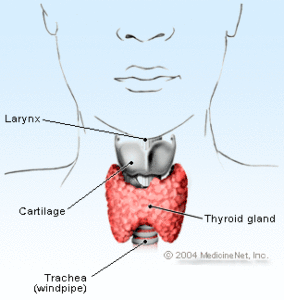
The thyroid is a butterfly-shaped gland attached to the front of the windpipe. It’s a part of the endocrine system, which is responsible for producing, storing, and using hormones.The thyroid is responsible for regulating metabolism, growth, temperature, and energy, so it is very important to keep thyroid hormones in balance.
Hashimoto’s is believed to be the most common cause of primary hypothyroidism in North America as a cause of non-endemic goiter, it is among the most common. It occurs between eight and fifteen times more often in women than in men. Though it may occur at any age, including in children, it is most often observed in women between 30 and 60 years of age.
In India too, there is a significant burden of thyroid diseases. According to a projection from various studies on thyroid disease, it has been estimated that about 42 million people in India suffer from thyroid diseases. Among that number, a majority can be due to Hashimoto’s. We do not have a large study which can give us a better picture.
Difference between Hashimoto’s and Hypothyroidism:
- Generally speaking, Hashimoto’s thyroiditis is a disease, and hypothyroidism is a condition that happens as the result of a disease.
- Hashimoto’s disease occurs when white blood cells attack the thyroid and slow it down(hence called autoimmune disease). Hypothyroidism develops when the thyroid isn’t able to produce enough thyroid hormone.
Symptoms:
Symptoms of Hashimoto’s are similar to that of hypothyroidism:
- Fatigue and sluggishness
- Increased sensitivity to cold
- Constipation
- Pale, dry skin
- A puffy face
- Hoarse voice
- Unexplained weight gain
- Muscle aches, tenderness and stiffness
- Hives
- Pain and stiffness in joints and swelling in knees or the small joints inhands and feet
- Muscle weakness, especially in lower extremities
- Excessive or prolonged menstrual bleeding (menorrhagia)
- Depression, etc.
Root Causes and Risk Factors:
Any Autoimmune condition is multifactorial. The same holds good in this case as well. Genetics, our diet, environmental influences, stress, our hormone levels and immunological factors are all factors contributing to Hashimoto’s. So just popping a pill is not an answer.
Risk factors include having a previous autoimmune condition like arthritis, Smoking, Long term stress and trauma,Eating disorders and Excessive exercise.
Diagnosis:
Testing for Thyroid-stimulating hormone (TSH), free T3, free T4, and the anti-thyroglobulin antibodies (anti-Tg), anti-thyroid peroxidase antibodies (anti-TPO, or TPOAb) and anti-microsomal antibodies can help obtain an accurate diagnosis.
Treatment:
Conventional treatment proposes taking medications, such as the synthetic thyroid hormone called levothyroxine. Sometimes surgery is needed if the disease progresses enough.These treatments don’t solve the underlying problems that are causing autoimmune reactions to happen in the first place. Medications are often not a cure-all and if we do decide to use thyroid medications such as synthetic hormones or steroids, chances are we will need them for the rest of our lives.
Natural treatments:
There are many holistic methods to reduce inflammation in the body. These address the root causes.
Heal the Gut:
Removing inflammatory foods to heal the gut is the first step. Eliminate gluten and dairy from the diet. With many of my clients this protocol has worked. Eat lots of whole foods with emphasis on lots of vegetables,fruits and seeds.
Probiotics:
Incorporate probiotics like fermented foods in the diet.
Eliminate Processed foods:
Fast foods predominantly provide empty calories with very high concentration of salt, refined sugars and bad fats. They are laden with harmful additives which messes with our harmonal balance.
Maintaining Vitamin D levels:
A normal Vitamin D level is very important in maintaining hormonal homeostasis.
Minerals:
Zinc, Selenium and Iodine levels have to be optimised.
Omega 3 foods:
These are anti inflammatory in nature. Incorporate spirulina, seaweeds,walnuts,fish and flaxseeds in the diet.
Stress Elimination:
Studies have found that a high proportion (up to 80 percent!) of patients with autoimmune symptoms report uncommon emotional stress before disease onset. Stress can trigger alterations in the production of neuroendocrine hormones and contribute to immune dysfunction by increasing cytokine production. Doctors are now warning patients that stress management should be considered in all multidimensional treatment approaches to resolving underlying causes of Hashimoto’s disease and other disorders (like other thyroid disorders and rheumatoid arthritis).
Meditation,taking detox baths and massages, regularly doing adaptive exercises (like barre, yoga, Pilates and weight-training), reading spiritual growth books, spending time outdoors, music therapy and fostering good relationships are all proven in stress reduction.
Conclusion:
There has been a sudden increase in the number of Thyroid cases in the past decade.Majority of them is due to faulty lifestyles and not having any genetic predisposition. We should address the overall problem and not just pop a pill.
Thanks Anupama – was an interesting read